
The peer-reviewed journal publishes research on machine learning, AI, sensors, IoT, robotics, bionics, metaverse, and Web3 technologies in healthcare — with a focus on solutions that enhance human well-being.
The journal’s mission is to bring clinicians and digital health developers into one community, supported by a transparent blockchain-based publishing process.
✍ Write the new chapter of health science
Our approach empowers researchers to build privacy-safe Web ML & AI healthcare applications and helps digital health developers meet healthcare standards through clinician-led project review — all supported by a blockchain-based transparent publishing process.
History
The journal was founded on January 12, 2024, as an experimental project developed during the Editor-in-Chief’s Master of Health Business Administration diploma paper.
Aim and Scope
Web3 Journal: ML in Health Science is a peer-reviewed online journal that publishes research on machine learning, AI, digital applications, the metaverse, Web and Web3 technologies, robotics, and bionics that contribute to enhancing human well-being and comply with current healthcare standards.
The journal welcomes submissions on:
- Numerical machine learning models built on healthcare research data.
- Computer vision models based on medical imaging.
- Custom generative AI models designed for healthcare settings.
- Metaverse applications for disease treatment or education within healthcare.
- Web3 and DeFi solutions within healthcare.
- Digital health applications.
- Research on medical devices, medical hardware, and software.
- Research on medical sensors, including those integrated with AI, IoT, or as standalone solutions.
- Innovative work in robotics, and bionics in healthcare.
- Research on biomedical AI ethics in model building and application.
- Review articles and poll results exploring trends and innovations in digital medicine.
- Opinion pieces describing individual biomedical projects, featured as interviews with the editor.
Absolute priority is given to submissions that:
- Utilize MLHS applications, including:
- Web AI Playground for developing and deploying medical AI models;
- SAIMSARA for AI-assisted medical scientific writing;
- Synthetica for synthetic medical image generation, cleanup, or augmentation.
- Retract for screening scientific paper’s retraction risk & journal pattern.
- Are submitted as Individual Editorial Opinion Pieces under the Digital Health Project 360° format, presenting end-to-end digital health, AI, Web3, or biomedical innovation projects.
Target Audience
The primary target audience of the journal includes healthcare stakeholders, such as patients, healthcare providers, medical researchers, and industry professionals.
Access and Fees
The journal is initially published as Diamond Open Access - meaning no fees for authors to submit or publish manuscripts, and no fees for readers to access articles.
Paid optional services are listed on our Editorial & Scientific Services page.
Peer Review
The primary focus of the peer review is to assess, from the perspective of healthcare professionals, the implications of digital technologies within healthcare settings, with particular attention to practical integration, patient safety, ethical considerations, and data privacy. The peer review is based on recommendations for authors and their projects, which the editorial board regularly updates to ensure continuous improvement. We employ a single-blind review process: the identities of the authors are known, but the reviewers remain anonymous
Reviewer Compensation (per completed peer review):
- 25 MLHS app credits to the reviewer’s MLHS Apps account (mlhs.ink/apps). 1 credit = $0.50 and equals 1 generation in Synthetica or HealTimeLapse, or 1 data input in SCI3 Repository or adds free Retract app.
- 1-month SAIMSARA subscription (≈ $39), the AI-powered medical scientific article review assistant.
Copyright
All accepted articles are published immediately after production, ensuring quick access and immediate citation for authors and readers. The content is freely and unrestrictedly available to everyone under the CC BY-SA 4.0 license. Authors retain the copyright and full publishing rights without restrictions. Our journal allows authors the flexibility to deposit versions of their work in an institutional or other repository of their choice, supporting wider dissemination and accessibility of their research.
Publishing Shedule
The journal publishes one issue per year, with the exception of the inaugural issue, which was published outside the regular schedule.
Indexing and Archiving
ML in Health Science is a member of Crossref. All publications are assigned DOIs and are automatically listed on the following platforms:
- WorldCat
- Scilit
- R Discovery
- Semantic Scholar
- ResearchGate
- ORCID
etc...


The journal content is automatically preserved in the PKP Preservation Network.
Blockchain Preservation of Abstracts

Language
The submission and publication language is English only. Authors may include a version of the manuscript in a language other than English as supplementary material. If the manuscript is accepted and published, this additional version will be assigned the same DOI.
For authors submitting papers in languages other than English, we recommend utilizing the professional translation services provided by our partner - Lingrowth, an international language service provider specializing in medical and life science translations. A discount is available if the purpose of the translation is specified as publication in this journal.

Editing of Published Articles
We allow editing of published content. Minor edits will be performed within the same version and DOI of publication. Major edits will be performed within the same DOI, with the new version superseding the previous one. Authors should contact the editorial board to request editing of their published papers.
Editorial Team
Dr. med. Yury Rusinovich, MHBA
Editor in Chief
Alexander Vareiko
Linguistic Editor
Nikita Shestak, PhD
Developmental Editor
Prof. Dr. Vladimir Khryshchanovich
Scientific Editor
Neji Hasni, PhD
Technical Editor
Dr. med. Volha Rusinovich
Sustainability Editor
Albert Harypau
Ethics Editor
Dr. Praveen Kumar Poola
Guest Editor
Total article views: 0
Total Comments: 0
Latest Articles
-

Impact of Fine-Tuned Machine Translation on Medical Documentation Translation and Client Satisfaction
Alexander VareikoDOI: 10.62487/m0brp535Published on: January 21, 2024
Category: Original Article
-
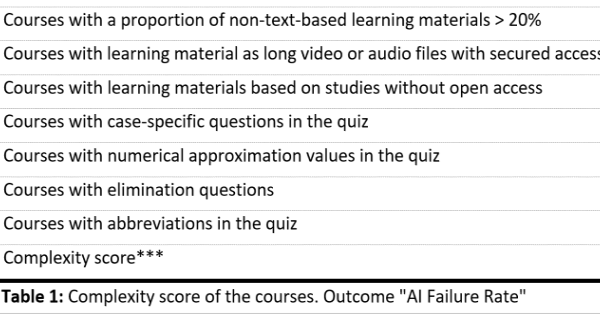
Prevention of Artificial Intelligence (AI) Misuse in Online Medical Education
Yury Rusinovich, Volha RusinovichDOI: 10.62487/8ny3zh09Published on: January 7, 2024
Category: Original Article
-

Why "ML in Health Science"
Yury RusinovichDOI: 10.62487/e4ccm968Published on: January 1, 2024
Category: Editorial
Archives

Why ML in Health Science
Vol. 1 No. 1 (2024)
This is the first issue of the journal, discussing the balance between humans and machines in healthcare and emphasizing the need for a human-centered approach in AI, ML, E-Health, and Web3 applications.
Evaluation of AI, ML, E-Health, Metaverse, and Web3 Projects
Vol. 1 No. 2 (2024)
In this issue, we begin by presenting original projects guided by evidence-based standards in health science.

Science 3.0
Vol. 2 No. 1 (2025)
This issue introduces and explores the term Science 3.0, defined as human research driven by decentralized AI agents.

ML Architecture
Vol. 3 No. 1 (2026)
This issue focuses on the design, comparison, and evaluation of machine-learning architectures in health science, including deep neural networks, ensemble models, attention mechanisms, transfer learning, and clinically oriented model validation.